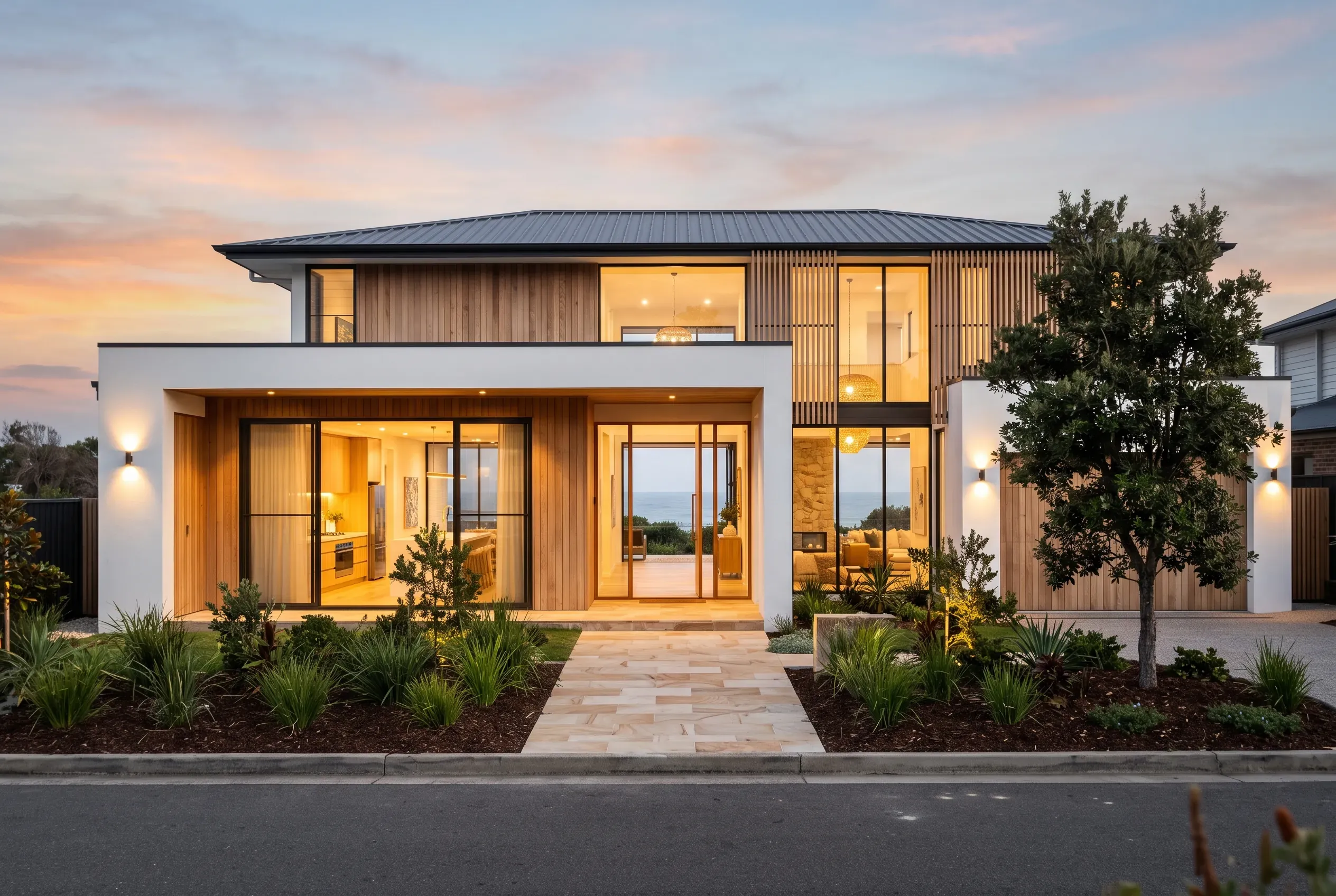
Small business website design: what actually matters
What Google and the web standards bodies publish about good small business website design, and what it takes to meet those standards.
A homeowner weighing up two or three businesses builds a picture of who seems most trustworthy from every channel they find: your Google Business Profile, the reviews, the socials, and the website behind them. The website is a trust signal in its own right, because care in the website reads as care in every part of the business.
And what makes a website good is not a matter of taste. Google publishes what its ranking systems reward. The bodies that write the web’s standards publish the numbers a well-built site meets. None of it is guesswork, and none of it is hidden.

What belongs on the site
A comparing homeowner arrives with questions already formed. Does this business do my kind of job? Is the quality there? Do they cover my area? What will they be like to deal with? Every element on the site earns its place by answering one of them.
The services come first, named specifically. A page that says deck builds, re-decking and outdoor stairs answers the first question before the phone rings. A page that says outdoor services leaves it open.
Then the proof. Photos of finished jobs, each with a couple of lines of context: what the customer needed, what was done. Reviews are most convincing sitting beside the work they describe, not gathered on a page of their own.
Contact details stay visible throughout: a phone number that is easy to tap on a mobile, and a short form for the considered enquiry that arrives at night. And a clear next step, so the customer who likes what they see knows exactly what to do.
All of it has to be easy to find. A menu that names the pages plainly, services, projects, contact, lets a customer reach any answer in a tap or two.
Page count follows from the questions, not the other way around. A site needs as many pages as it takes to answer them properly, and no more.
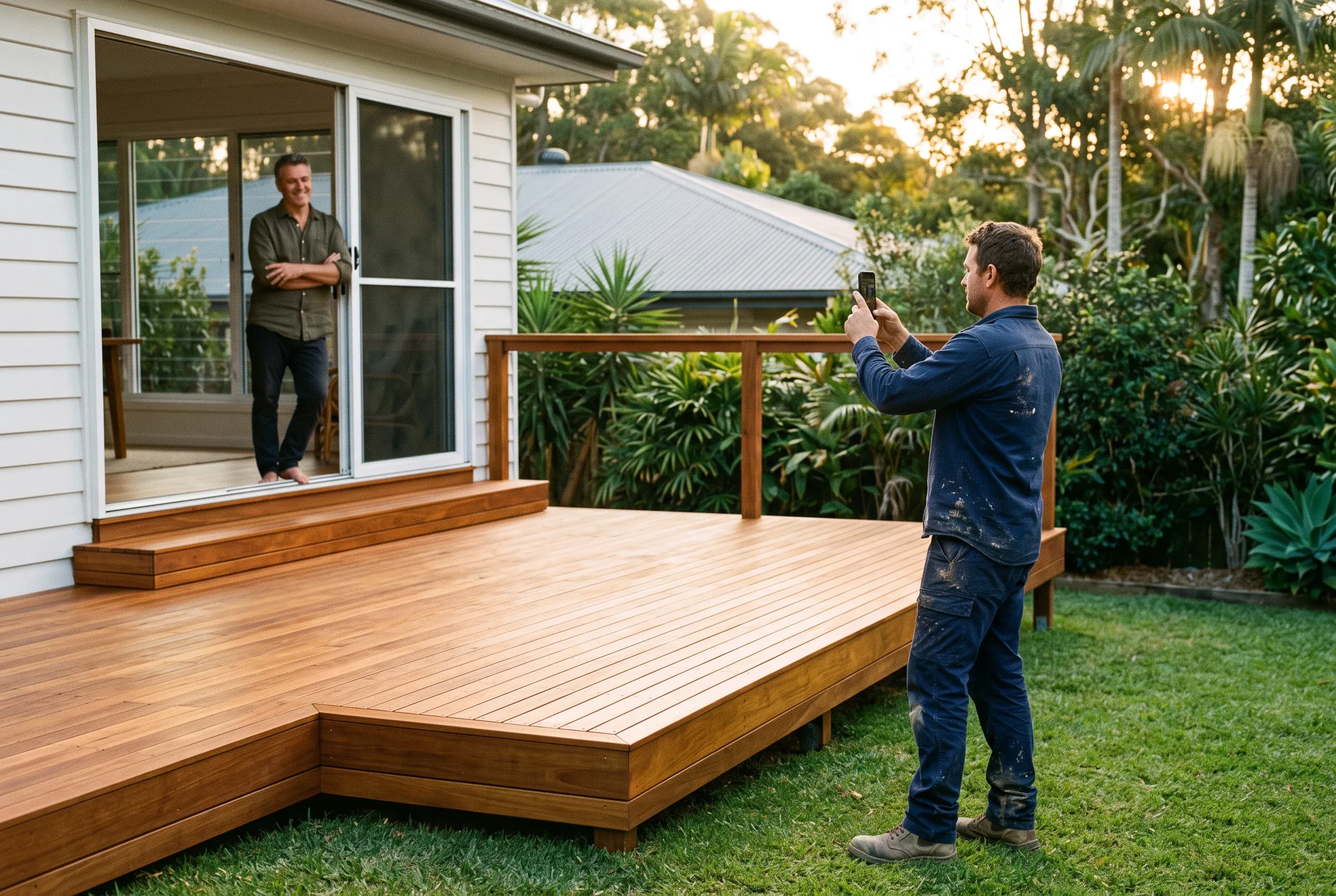
Mobile is the version Google reads
Google is explicit about which version of a site counts: “Google uses the mobile version of a site’s content, crawled with the smartphone agent, for indexing and ranking. This is called mobile-first indexing.” The phone version is not a smaller copy of the real site. To Google, it is the site.
Most websites serve one set of content shaped to fit the screen. Some platforms also let the mobile layout be arranged separately, and where that is in play Google’s advice is direct: “Make sure that your mobile site contains the same content as your desktop site.” Either way, the design work at phone size is how the content carries. Type that is comfortable to read without zooming. A phone number that dials on a tap. Photos of finished work that hold their detail on a small screen. A form short enough to fill in from a driveway. Google’s own self-assessment asks exactly this: “Does your content display well on mobile devices?”

Speed has published numbers
How fast a site needs to be is not a judgement call. Google’s web.dev documentation defines three measures, the Core Web Vitals, which it says “apply to all web pages” and “should be measured by all site owners”. Each comes with a published threshold.
Largest Contentful Paint measures loading: the main content “should occur within 2.5 seconds”. Interaction to Next Paint measures responsiveness: “200 milliseconds or less”. Cumulative Layout Shift measures how much the page jumps around while loading: a score of 0.1 or less. And Google recommends measuring at “the 75th percentile of page loads”, so a site has to hit the numbers for most of its visits, not just the quickest ones.
These numbers reach ranking too. Google’s page experience documentation says it directly: “Core Web Vitals are used by our ranking systems.”
Having published targets changes what slow means. It is not a vague feeling about a site. It is a specific number against a specific line, which makes speed a design requirement that can be planned for and met, the same as any other.
What Google says it rewards
Google’s page experience documentation states the reward plainly: “Google’s core ranking systems look to reward content that provides a good page experience.” It is just as plain about the order of things: “Google Search always seeks to show the most relevant content, even if the page experience is sub-par.” Relevance comes first. Clear, specific writing about what you do and where you work matters most, and everything else supports it.
Google also defines what that writing should be: “People-first content means content that’s created primarily for people, and not to manipulate search engine rankings.” For a service business this is good news. The page a homeowner finds genuinely useful and the page Google rewards are the same page.
Google publishes questions for owners to assess their own pages, in its own words:
- Are your pages served in a secure fashion?
- Does your content display well on mobile devices?
- Does your content avoid using an excessive amount of ads that distract from or interfere with the main content?
- Do your pages avoid using intrusive interstitials?
- Is your page designed so visitors can easily distinguish the main content from other content on your page?
Two smaller elements do steady work in the search results themselves. Google’s starter guide says “a good title is unique to the page, clear and concise, and accurately describes the contents of the page”, and that “A good meta description is short, unique to one particular page, and includes the most relevant points of the page.” Those two lines are often what a customer reads before they ever see the site, so they are worth writing deliberately.
Structured data is one more layer a well-built site carries. Google describes it as “a standardized format for providing information about a page and classifying the page content”, and says that adding it “can enable search results that are more engaging to users”, which it calls rich results.
Design everyone can use
The W3C, the body that writes the web’s standards, defines the goal: “Web accessibility means that websites, tools, and technologies are designed and developed so that people with disabilities can use them.” The same documentation says accessibility “also benefits people without disabilities”, and its examples are everyday ones: people on devices with small screens, “older people with changing abilities due to ageing”, and people in “bright sunlight”. That last one is a customer reading your site in a backyard at midday.

The guidelines put numbers on it. WCAG, the W3C’s accessibility standard, requires normal text to have a “contrast ratio of at least 4.5:1” against its background, and large text at least 3:1. Very light text on a light background can sit under that line, and the line is exact enough to check.
Alt text is part of the same care. Google describes it as “a short, but descriptive piece of text that explains the relationship between the image and your content”. Every photo of finished work deserves one.
The W3C also states there is “a strong business case for accessibility”, because accessible design “improves overall user experience and satisfaction, especially in a variety of situations, across different devices, and for older users”. Design that works in the hardest conditions works everywhere.
The details that read as care
Small signals compound, and a comparing customer takes them in without naming them.
The domain is one - com.au domains are licensed under auDA’s rules, which require the holder to “have an Australian Presence” and to keep it “throughout the Licence Period”. A business with an ABN qualifies. So the .com.au on the end of the address quietly says the business behind it is verifiably Australian.
HTTPS is another. Google’s web.dev documentation says “HTTPS helps prevent intruders from tampering with communication between your sites and your users’ browsers”, and that it “prevents intruders from passively listening” to those communications. It also sits inside Google’s own self-assessment: “Are your pages served in a secure fashion?” A customer typing their phone number and address into your enquiry form deserves that protection as a matter of course.
Consistency is the third. The same business name, the same phone number and the same service areas on the website, the profile and the socials. Every channel a customer checks either confirms the others or raises a small question. Matching details answer the question before it forms.
What a build costs, in general terms
A build is relative to the consideration and time that goes into it. Understanding the business, deciding what belongs on each page, writing it clearly, getting the design and the imagery right, then refining until it all holds together. That is time, and the price reflects how much of it the studio plans to spend.
Which gives you a way to read any quote without a price list. The cheaper the website, the less time it makes sense for the studio to spend refining and personalising it. A very low quote is worth an honest question: does that price buy the hours a considered, personalised site takes? At the other end, the more personalised and polished a site needs to be, to compete in a higher-end market for example, the more time is justified.
Attention and consideration to detail is where quality surfaces. Time is what buys it.
Doing it yourself, hiring it, and what it runs on
You can build a site yourself, and plenty of owners have. The honest comparison is wider than the invoice. It is your time, priced at your hourly rate, plus what it costs the business if the finished site does not do its job. And the difficulties rarely show up front. They surface once you are into it, the same way a job outside your trade looks simple until you start it. Only then do you see that building a website is a trade of its own.
A professional build is a larger investment, weighed the same way, and a substantial job won through the site often covers it.

What the site runs on comes down to requirements and preference, and there are good options at every level. Ours is the modern Astro stack. We chose it because it is built for super light-weight, fast-loading sites, and because modern web tooling delivers a higher-end result for the time that goes in. Light-weight and fast-loading is exactly what the published speed numbers measure.
The platform is only ever part of it, because design covers so much: where things sit on the page, whether every page is in line with the brand, how a customer moves through the site, how the content is shaped, the imagery, the tone. A site can run on the right platform and still miss on those. The craft is in getting every one of them right at once.
Frequently asked questions
What should a small business website include?
How much does a small business website cost?
Do I need a website if my business is already on social media?
How fast does a small business website need to be?
Does website design affect Google rankings?
Should I build my own website or hire a professional?
How we can help
Modern websites, brand identity, visual assets, and content - built to help your business get found and look the part.
- 01
Get in touch and
tell us what you need. - 02
Review where you are
and what is holding you back. - 03
Get a clear proposal
with scope and pricing.
No obligation, no hard sell.
Based in Northern NSW · Australia-wide
Message sent
Thanks, your message is on its way. We read every enquiry personally and will be in touch soon.