Websites for tradies: what a good website should actually do
A good tradie website should make your work easy to understand, give customers confidence and help the right people take the next step.
The moment someone looks you up
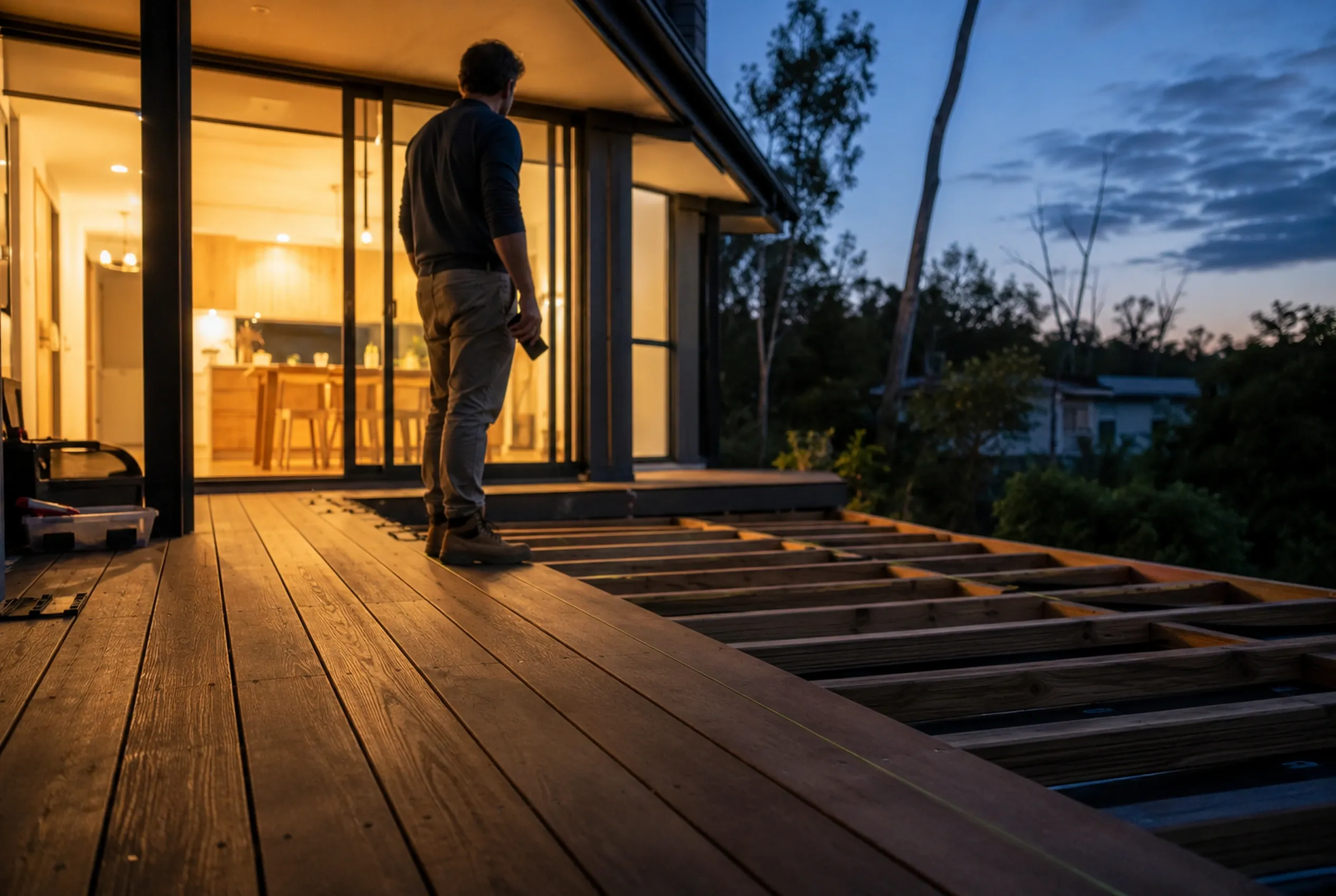
Most trade businesses are built on reputation. A customer hears your name from a neighbour. A builder passes it along. Someone sees your ute outside a well-run job, or comes across you in a local Facebook group.
Then they look you up.
That moment matters more than most owners realise. The recommendation started the conversation, but what someone finds online is what confirms it. Your website is often the first proper introduction a customer has to your business, even when your name came from somebody they already trust.
A good website backs up the recommendation. It shows what you do, the standard of your work, where you operate and what you will be like to deal with. It does not need to be flashy. It needs to feel clear, capable and considered, with the same care in it that goes into a finished deck or a well-run renovation.

Make it easy to see you are the right business
Trade businesses usually grow faster than their websites. You might have started out taking every job that rang, and now specialise in larger renovations, custom carpentry or solar. Your service area has shifted. There is work you no longer want. The website should describe the business you have now, and the work you want more of.
Mostly, that comes down to being specific. Instead of “outdoor services”, name the actual work:
- Decks and outdoor living
- Retaining walls
- Garden design and planting
- Irrigation systems
- Commercial landscaping
The same goes for every trade. When someone opens your website with a project in mind, they are quietly asking a handful of questions. Does this business do my kind of job? Is the quality there? Are they licensed and established? Do they cover my area? Specific pages answer those questions before the first phone call, and they spare you the enquiries that were never a fit in the first place.
There is no need for “best in the region” or “unmatched quality”. Customers have read those lines a hundred times. Real detail is more convincing than any claim.
Show the work you want more of
A project gallery is not a scrapbook of everything you have ever done.
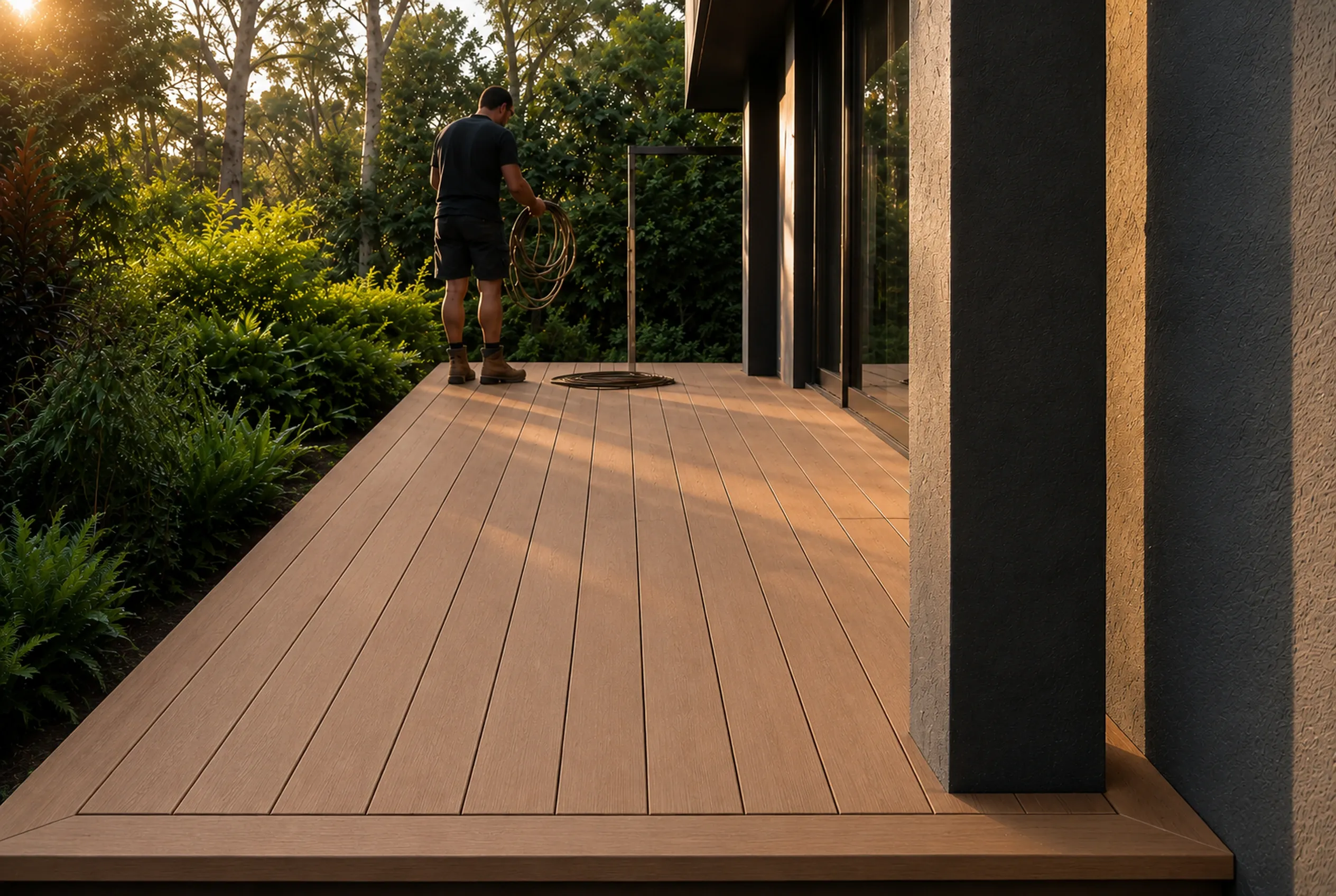
The gallery has one purpose, and that is to show where you want the business to go. A deck builder chasing complete outdoor projects should not lead with minor repairs. A builder targeting architect-designed homes should give those projects room to breathe. Show the jobs you want more of, and you will be asked for more of them.
A few lines of context turn a photo into a story: what the customer needed, what you did, how it turned out. Two or three short paragraphs is plenty.
The photos themselves matter more than most business owners expect, and a modern phone does a fine job if you give it a chance. Tidy the area, shoot in daylight, step back far enough to show the finished work in its space, and take a few versions. Before-and-after pairs work especially well for renovations, bathrooms and landscaping.
Reviews count for just as much. Rather than sitting on a testimonials page nobody visits, they do their best work next to the jobs they describe: a comment about a renovation beside that renovation, a line about clear communication near the enquiry form. And asking for them is best built into finishing the job, while the customer is standing there happy with the result.
Make getting in touch easy
Different jobs arrive differently. A loss of power gets a phone call. A new deck or a bathroom gets a considered enquiry, often at night. The site should support both: a phone number that is easy to find on a mobile, and a simple form that asks only for what you need to respond properly - the suburb and a short description of the job.
Keep the practical details close by. The areas you genuinely service, and whether you take emergency callouts. It also helps to say when people can expect to hear back. A site that says “we reply within one business day” makes the business feel organised before a word has been exchanged.
Done well, this lifts the quality of the enquiries as much as the number of them. The first conversation starts with someone who already knows you cover their area and take on their kind of job.
Written clearly enough to be found
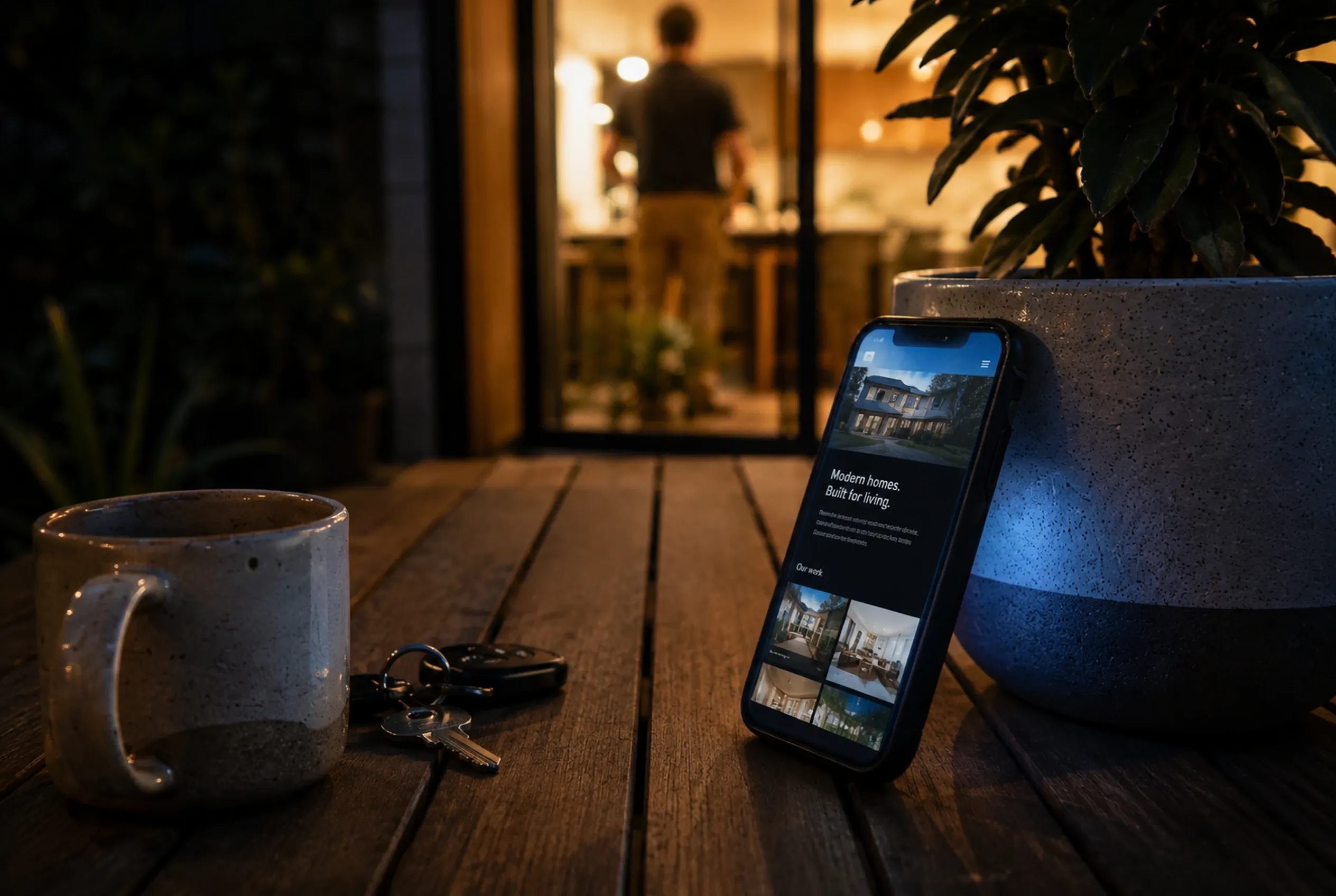
Customers look for local trades in plain language. Who builds decks near me? Which builders do extensions in my suburb? They type those questions into Google, and increasingly into AI assistants.
A page that says “quality solutions for all your needs” gives a search engine very little to work with. Write plainly about what you do, where you work and the projects you have finished. Then give that writing the right structure: clear headings, short paragraphs, service pages that stand on their own, and FAQs that answer the questions customers actually ask. Search engines and AI assistants both read that structure. When the page is organised that way, they can pull out what your business does and recommend you with confidence. Our guide to getting recommended by AI answer engines goes deeper, but it starts here.
What a professional build takes care of
You can get a site online yourself these days, and plenty of businesses start that way. The risk is not that the page looks rough. It is that the work under the hood gets skipped or half-done: the site looks fine on your laptop, may load slowly on a phone, is hard for search engines to read, or never quite gets found for the jobs you want.
A professional build puts attention on that layer. How fast the pages load on a phone in average reception. Titles and descriptions written for the way people actually search. A structure search engines and AI assistants can read properly. Images sized to look sharp without slowing anything down. Redirects, security and the dozens of small settings that quietly shape how a site performs.
Building a website is a lot like building a house. Get the plans and foundations right up front, and you get better performance and fewer problems down the track.
None of that needs to become your problem to understand. That is the point of bringing someone in: the under-the-hood work is done once, done properly, and keeps working in the background while you are on the tools.
Build the site around the business
A good tradie website follows a proven framework: clear services, proof of the work, reasons to trust you, and an easy way to get in touch. Fast on a phone, clearly written, and built on a platform the business controls.
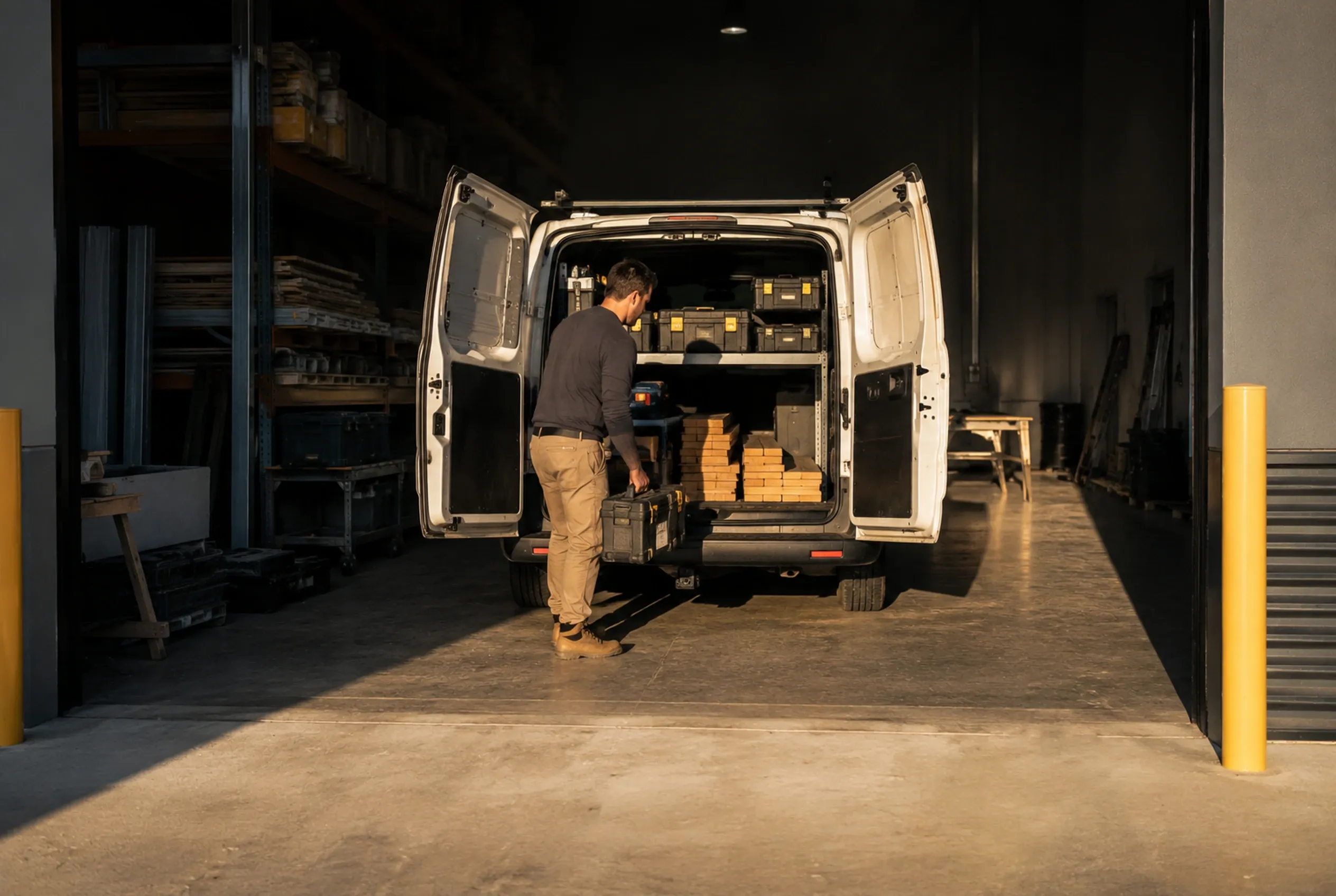
What you put into that framework is yours - your jobs, your areas, your personality, and the way you like to work. A callout business will lean harder on the phone number and the problems you solve. A deck builder or renovator will put more weight on completed projects and a simple enquiry form. A builder taking on a few substantial jobs a year will give those projects room to breathe. Same structure, different emphasis.
Frequently asked questions
Do I need a website if most of my work comes from word of mouth?
Is a Google Business Profile enough?
Can I use Facebook or Instagram instead?
How many pages does a tradie website need?
Will a website get me more work?
How we can help
Modern websites, brand identity, visual assets, and content - built to help your business get found and look the part.
- 01
Get in touch and
tell us what you need. - 02
Review where you are
and what is holding you back. - 03
Get a clear proposal
with scope and pricing.
No obligation, no hard sell.
Based in Northern NSW · Australia-wide
Message sent
Thanks, your message is on its way to Mike. He reads every enquiry personally and will be in touch soon.